
 National Consultation Hotline:


National Consultation Hotline:
News Center
NEWS
Assessment indicators and methods for the water purification effect of integrated water purifiersг┐
 2026-02-14 19:09:11
Assessment Indicators and Methods for the Water Purification Effect of Integrated Water Purifiers
With the improvement of people's living standards, the demand for drinking water is also increasing. Among the numerous water purification equipment, integrated water purifiers, with their high efficiency, convenience, and environmental protection features, are gradually becoming the first choice for homes, offices, hotels, schools, and other places. However, how the water purification effect of integrated water purifiers is, and how to evaluate them, is a topic worth in-depth discussion.
Firstly, Assessment Indicators of Water Purification Effect of Integrated Water Purifiers
Removal Rate: This is an important indicator for evaluating the water purification effect. The removal rate refers to the proportion of harmful substances reduced in the water after treatment by the water purifier. For example, the higher the removal rate, the more effective the water purifier is in removing harmful substances from the water.
Water Quality of Output: By detecting indicators such as bacterial content, heavy metal content, organic matter content, and residual chlorine content in the output of the water purifier, it is possible to fully understand the water purification effect. The closer the detection results of these indicators are to the national drinking water standards, the better the purification effect of the water purifier.
Durability: Durability refers to the stability and reliability of water purifiers during use. By observing whether the water quality of the output remains stable after long-term use and whether there are any malfunctions during use, the durability can be assessed.
User Experience: User experience is another important indicator for measuring the effect of water purifiers. It includes ease of use, noise level, appearance design, and so on. Whether users find it convenient to use, whether they feel disturbed by the noise, and whether they like the appearance design are all important factors affecting user experience.
Secondly, the Assessment Method of Water Purification Effect of Integrated Water Purifiers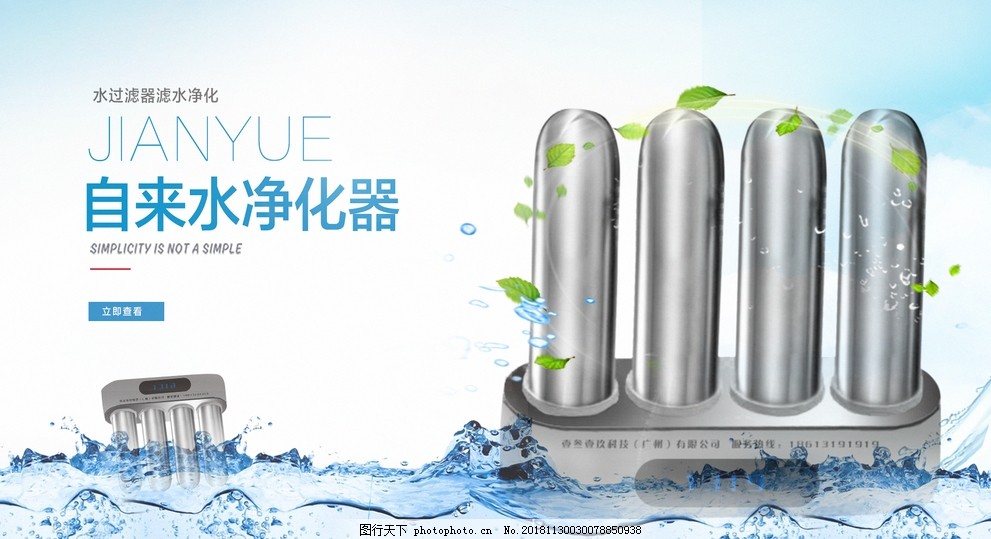
Laboratory Testing: By using laboratory equipment to test the water samples treated by the water purifier, the removal rate and water quality of the output can be evaluated through chemical, physical, and microbiological detection.
User Feedback: Collect feedback from users during the use of water purifiers to understand their experience, including water quality of the output, ease of use, noise level, appearance design, and so on.
Field Test: In the actual use environment, by continuously monitoring and recording the water quality of the output of the water purifier, as well as the user's experience with the water purifier, the durability and stability can be assessed.
Comparison Experiment: By comparing different brands and types of water purifiers through experiments, the purification effect can be evaluated by comparing indicators such as removal rate, water quality of the output, durability, and user experience.
On the whole, the assessment of the water purification effect of integrated water purifiers is a comprehensive process that requires consideration from multiple perspectives. Through scientific and reasonable evaluation indicators and methods, it is possible to understand the water purification effect of integrated water purifiers more accurately, thus providing consumers with better products and services.
About Us
News Center
Core Technologies
Product Showcase

HOTLINE:
ContactsAddresses:
Copyright © 2020-2025 Water Purification Materials and Equipment |