
 National Consultation Hotline:


National Consultation Hotline:
News Center
NEWS
How does the performance of intelligent water purification and monitoring equipment under different environmental temperaturesг┐
 2026-05-26 02:15:36
The performance of intelligent water purification and monitoring equipment under different environmental temperatures is a complex but important research field. It not only concerns the reliability and service life of the equipment but also directly affects the accuracy and efficiency of water quality monitoring. With the increase in global climate change and extreme weather events, it is particularly important to study and understand the performance of these equipment under various temperature conditions. The following is an in-depth discussion on this topic.
1. Impact of temperature on equipment performance
1.1 Temperature impact on humidity sensors
Humidity sensors are common components in intelligent water purification and monitoring equipment, used to measure the water content in water. Temperature changes can affect the response speed and accuracy of humidity sensors. Generally, humidity sensors may experience extended response times and reduced measurement accuracy when operating at higher temperatures. Conversely, in low-temperature environments, humidity sensors may exhibit delayed responses or fail to operate normally.
1.2 Impact of temperature on electronic components
Electronic components in intelligent water purification and monitoring equipment, such as microprocessors, sensors, and memory, are affected by temperature changes. Rising temperatures may cause electronic components to work unstably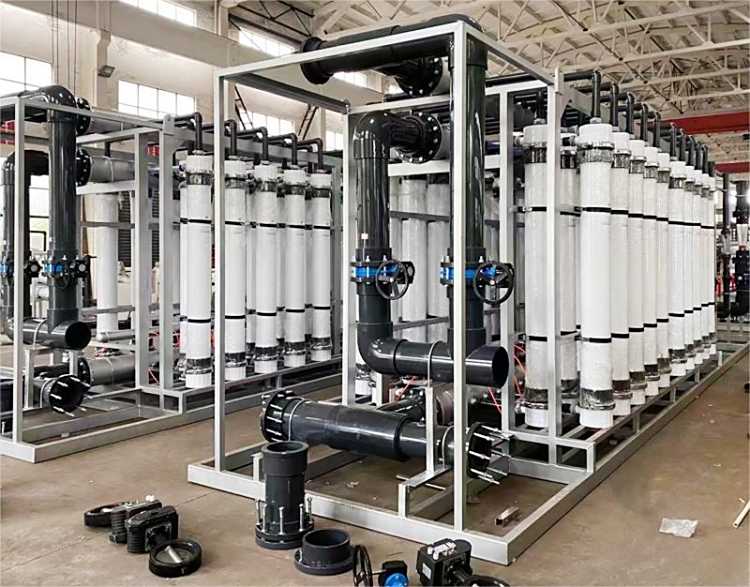 or even be damaged. Conversely, excessively low temperatures may affect the normal operation of the equipment, leading to shortened battery life or inability to start the equipment.
1.3 Impact of temperature on materials
Certain materials in the equipment (such as plastics, rubbers, etc.) may deform or under extreme temperatures, affecting the structural stability and sealing of the equipment. In addition, temperature changes may also lead to material aging, further affecting the performance and lifespan of the equipment.
2. Equipment design and optimization
To meet the performance challenges under different environmental temperatures, the design and manufacturing of intelligent water purification and monitoring equipment need to consider the following points:
Temperature compensation technology: Through built-in temperature compensation algorithms, sensor readings are adjusted in real-time to ensure data accuracy.
Temperature-adaptive materials: Selecting materials that can maintain stability within an extreme temperature range improves the durability and reliability of the equipment.
Redundant design: Adopting redundant design ensures that the equipment can still operate normally during temperature changes, reducing the risk of failure caused by temperature fluctuations.
3. Application scenarios
In different application scenarios, the sensitivity of intelligent water purification and monitoring equipment to temperature changes also varies. For example, in tropical regions, high temperatures may pose greater challenges to the equipment; while in polar or high-altitude regions, performance under low-temperature conditions needs to be considered.
In summary, the performance of intelligent water purification and monitoring equipment under different environmental temperatures is a multi-faceted and multi-level issue. Through optimized design and manufacturing techniques, it can effectively improve the stability and reliability of the equipment under various temperature conditions, providing strong support for the sustainable management of water resources.
About Us
News Center
Core Technologies
Product Showcase

HOTLINE:
ContactsAddresses:
Copyright © 2020-2025 Water Purification Materials and Equipment |