
 National Consultation Hotline:


National Consultation Hotline:
News Center
NEWS
Comparison of the function and effect between electrolytic water machines and ordinary water purifiersг┐
 2025-11-26 06:41:34
Electrolytic water machines and ordinary water purifiers have their own characteristics and application scenarios in the field of water purification, and there are certain differences in function and effect. This article will make a detailed comparison of the function and effect of electrolytic water machines and ordinary water purifiers.
Electrolytic water machines
Electrolytic water machines are devices that use electrolysis to decompose water into hydrogen and oxygen through electrical energy. Electrolytic water machines are mainly divided into two types: strong alkaline electrolytic water machines and weak alkaline electrolytic water machines.
Function and effect
Removing chlorine and organic matter: Electrolytic water machines remove chlorine and other organic pollutants from water through electrolysis, effectively improving the taste of drinking water.
Sterilization and disinfection: The disinfectants such as sodium hypochlorite produced by electrolytic water machines can effectively kill bacteria, viruses, and other microorganisms, providing certain disinfection functions.
Purifying water quality: Electrolytic water machines can remove suspended matter, colloidal substances, etc., from water, improving water quality.
Softening water quality: Electrolytic water machines can remove calcium, magnesium, and other minerals from water, thus softening water quality.
Producing hydrogen and oxygen: Electrolytic water machines produce hydrogen and oxygen during use, hydrogen can be used for healthcare, while oxygen can be used for daily respiration.
Ordinary water purifiers
Ordinary water purifiers usually use physical or chemical methods to purify water quality, common water purification technologies include ultrafiltration, reverse osmosis, activated carbon filtration, etc.
Function and effect
Removing large particles: Remove large particles of impurities from water through filter cores, such as silt and suspended matter.
Removing bacteria and viruses: Utilize activated carbon and other materials to adsorb bacteria and viruses in water, improving the safety of water quality.
Softening water quality: Remove calcium, magnesium, and other minerals from water through reverse osmosis or ion exchange resins, etc., to soften water quality.
Removing chlorine and organic matter: Some water purifiers remove chlorine and other organic pollutants from water through activated carbon filtration.
Improving taste: Improve the taste and color of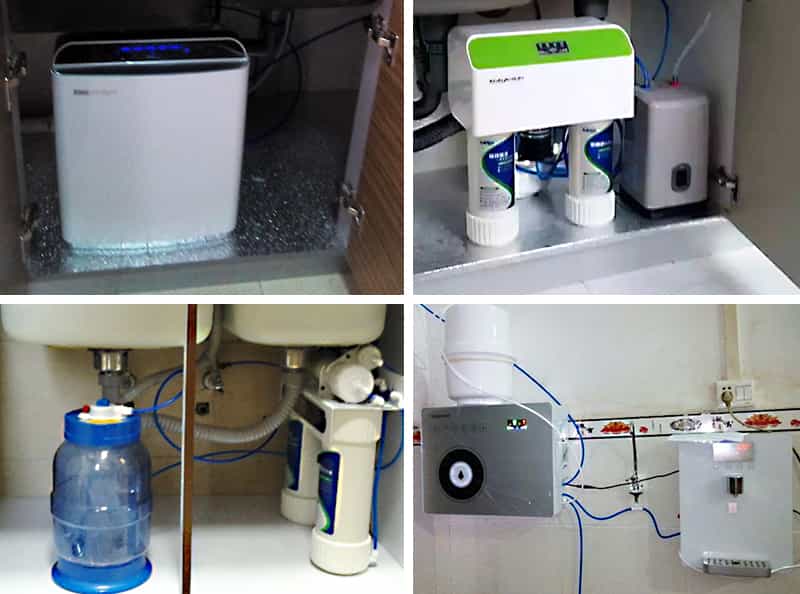 water through various filtration technologies.
Summary
Electrolytic water machines and ordinary water purifiers have different focuses in terms of function and effect. Electrolytic water machines have unique advantages in removing chlorine, sterilizing and disinfecting, and removing organic matter, and can also produce hydrogen and oxygen. On the other hand, ordinary water purifiers excel in removing large particles, bacteria, viruses, softening water quality, and improving taste. The choice of water purification equipment should be based on actual needs and water quality conditions. For situations that require the removal of large particles and bacteria/viruses, ordinary water purifiers are more suitable; while for situations that require the removal of chlorine, organic matter, and improving taste, electrolytic water machines may be more appropriate.
About Us
News Center
Core Technologies
Product Showcase

HOTLINE:
ContactsAddresses:
Copyright © 2020-2025 Water Purification Materials and Equipment |